Current Students and Their Projects
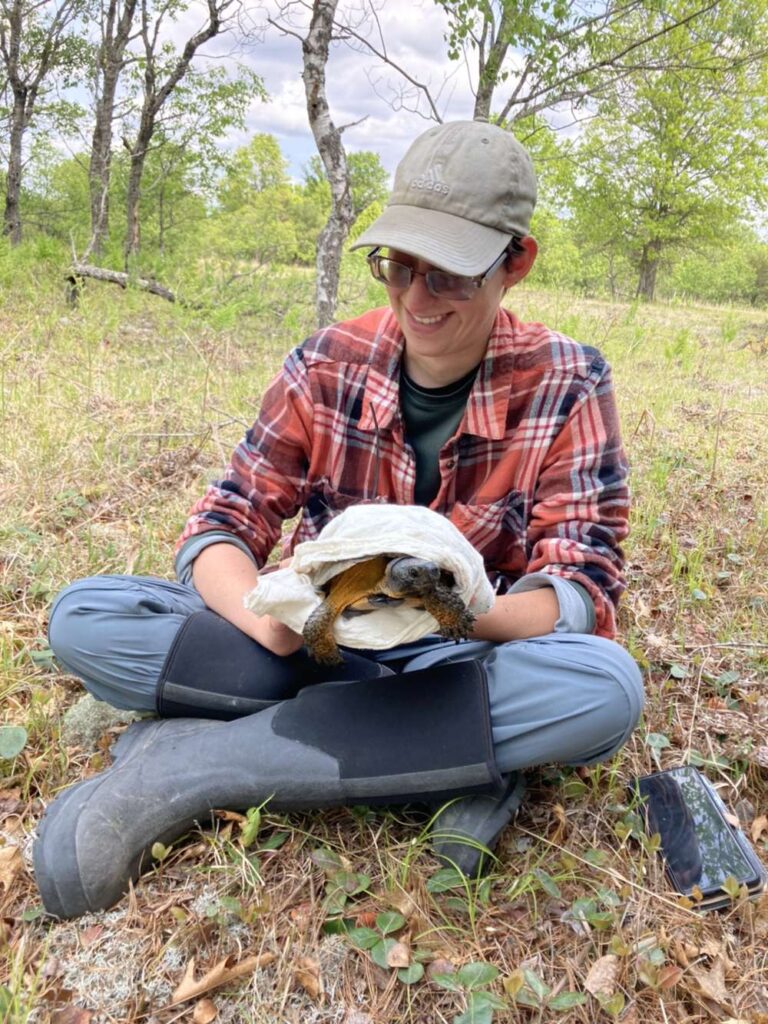
Autumn Straessle (2023)
Discovering Landscape Connectivity Patterns of Wod Turtles in Northern Michigan.
Autumn is tracking wood turtles in Northern Michigan to equip them with GPS logger units. These will be used to discover the possible connectivity patterns of the turtles in the Michigan landscape. These connections will reveal corridors used and barriers avoided by individuals during movement. All of which can be used to further develop conservation and management plans to protect these species.
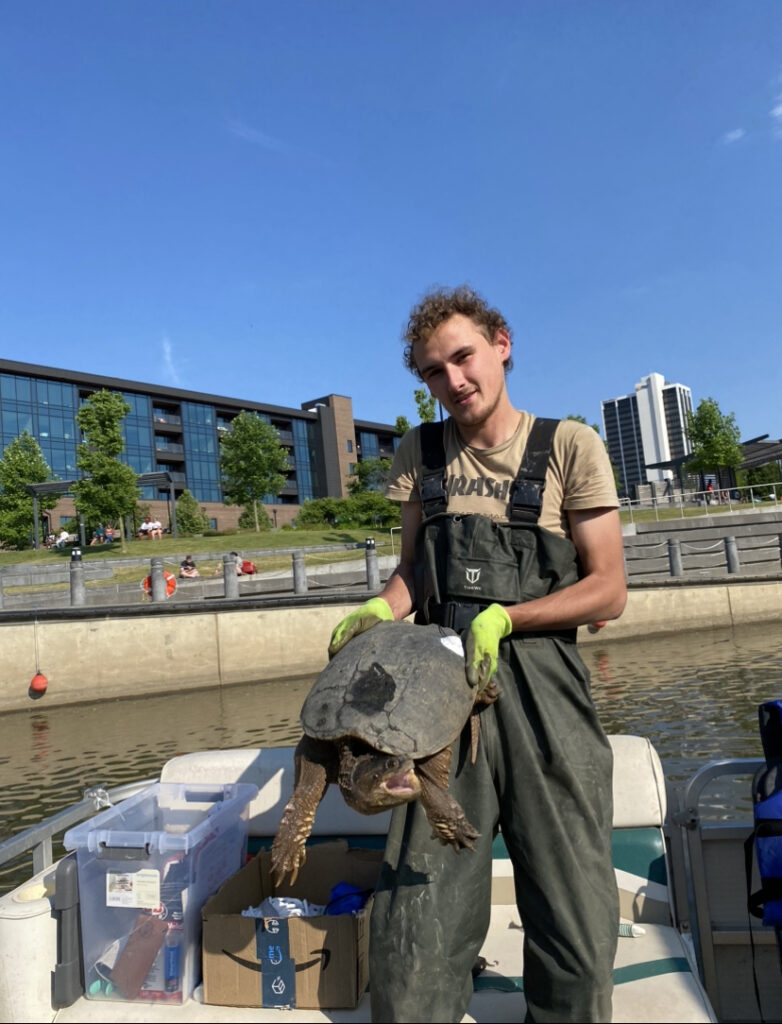
Jean-Baptiste Johnson (2023)
Habitat Use by Aquatic Turtles in a Midwestern Urban Landscape.
Jean-Baptiste focuses on understanding the dynamics and habitat use of a population of freshwater turtles located in an urban environment. The presence of infrastructure on the shores, anthropogenic activities, pollution, and other factors may force certain species to change their habits in order to adapt to this specific type of environment.
The study site for this project consists of the river ecosystem located in the heart of Fort Wayne, Indiana. By trapping and tracking, data is collected on the demographics of the turtle population, as well as small- and large-scale habitat use. He records and collects morphological data on all species of turtles caught in the river and only equips Common Snapping Turtles with transmitters. Their size and hardiness make them an ideal subject for telemetry tracking. This data should help understand where turtles feed, overwinter, and bask in the rivers and their general day-to-day behavior and preferred type of micro-habitat.
The presence of bridges, parks, log jams, boat ramps, culverts, and boat docks may represent an obstacle to the turtles, but they may also adapt and use them as an opportunity. It is also important to see how the different types of vegetation stands within a city influence the behavior of the animals so that we can offer a habitat solution to the ever-growing urban wildlife populations.
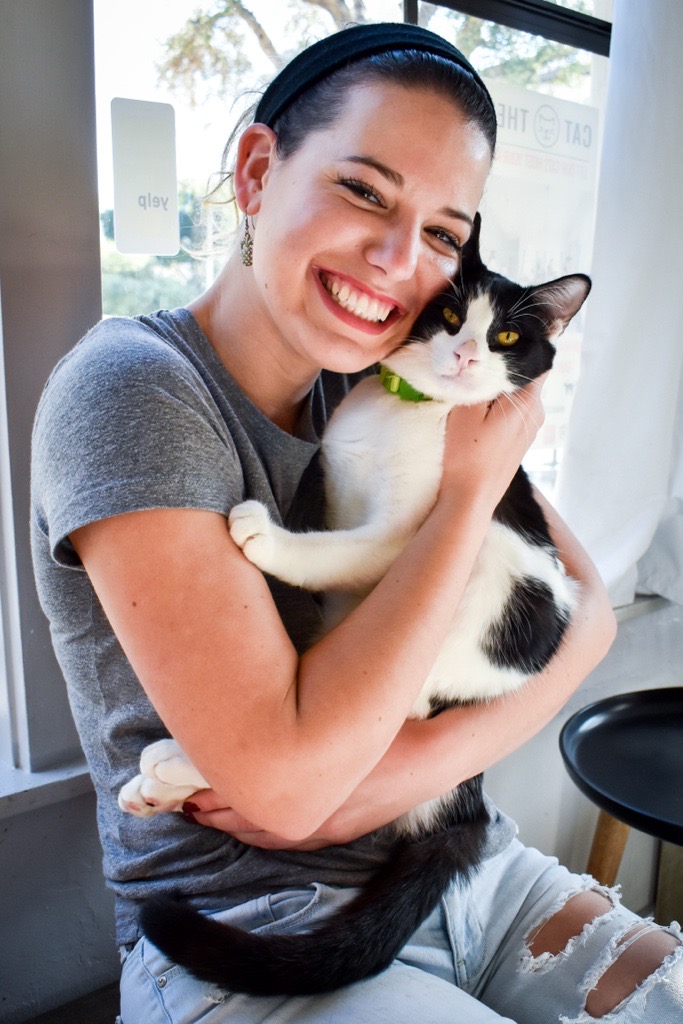
Becky Minda (2024)
Hydrology and Microhabitat Characteristics of Overwintering Habitat of the Eastern Massasauga in Northern Michigan.
Becky Minda, originally from Pittsburgh, Pennsylvania, started working on her Master’s thesis in Dr. Kingsbury’s lab in January of 2024 after graduating from the University of California, Santa Barbara, in 2021 with a B.S. in Zoology. She has completed internships with the Santa Barbara Wildlife Care Network and the Utica Zoo and worked as a veterinary technician for the last three years at various clinics. She is working with eastern massasauga (Sistrurus catenatus), a type of rattlesnake with a noted decrease in range and population since at least the 1990s. Her thesis through the ERC focuses on data obtained in Grayling, Michigan, in conjunction with the Michigan Department of Natural Resources. This data includes population surveys and environmental data such as water table depth, temperature, and habitat characterization. With this information, her goal is to understand where eastern massasaugas choose to overwinter, why they choose those locations, and how we can help to protect those areas. Additionally, the study can predict the overwintering habits of eastern massasaugas in other areas, which can help us further conserve the species.
Ellie Anne DeCarlis (2026)
Ellie obtained her B.S. In Wildlife Biology and Fisheries from Missouri State University in 2026. While there, she was involved in the Turtle Ecology lab on campus, and worked with Furrowed Wood turtle in Belize and Alligator Snapping Turtles and other Emydids throughout Arkansas. She also worked as an educator at a local museum and aquarium, where she discovered her passion for conservation education and outreach. At PFW, she joins the Wood Turtle research program and plans to characterize streams across the study area to better understand preferences by the species. This work will enhance our understanding of corridors and barriers across the landscape to better protect this population and improve movement modeling efforts as well.
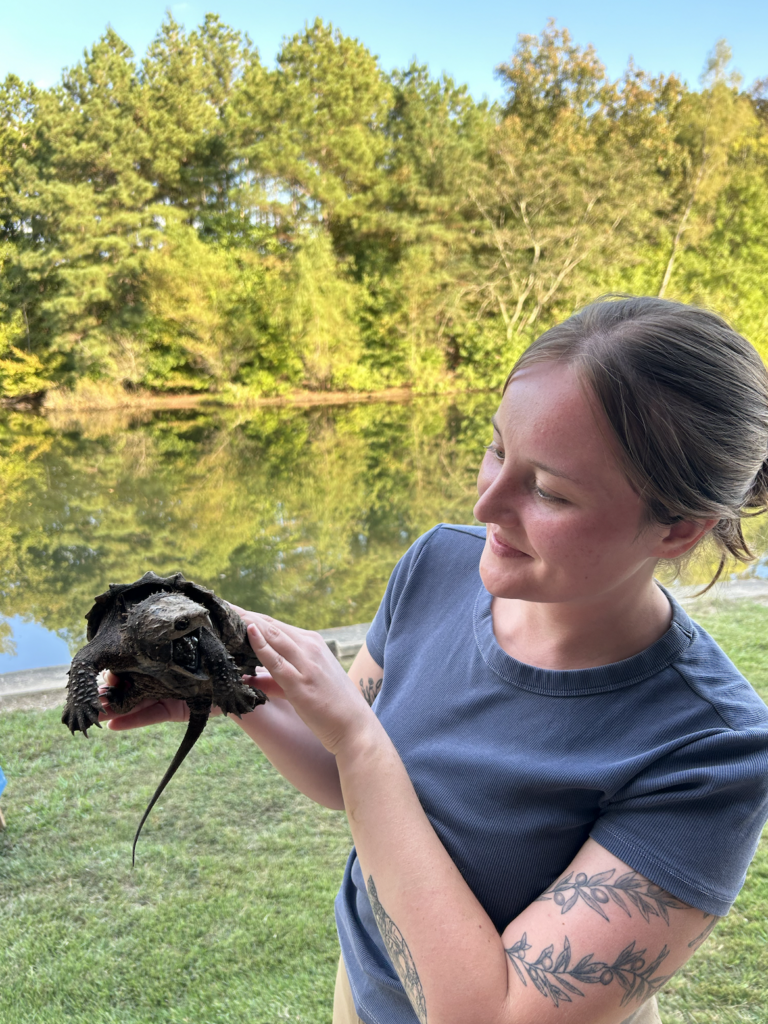
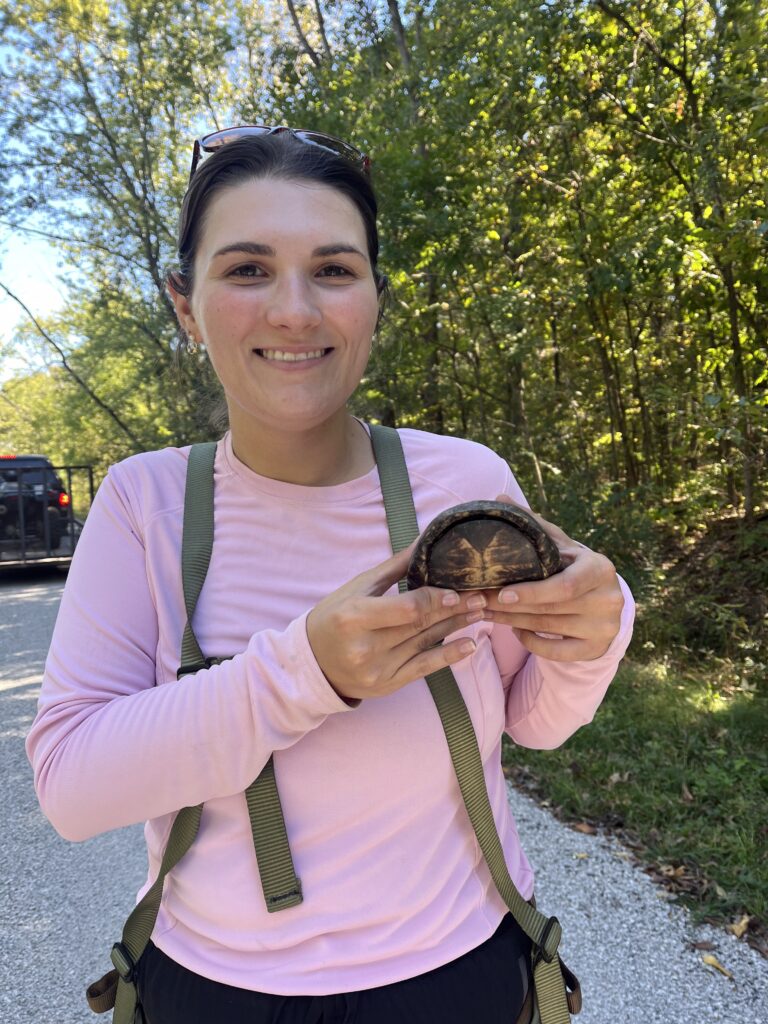
Savannah M. Viking (2026)
Savannah obtained her B.S. in Biology at Purdue University Northwest in 2023. After college she was an intern with the Army Corps of Engineers as a wildlife intern in Oregon. She was trapping invasive red-eared sliders, PIT tagging and taking morphologic data of the native species, the Northwest Pond turtle. She also helped in conservation efforts by conducting nest search and using exclosures to protect Northwest Pond turtle eggs and hatchlings. Savannah also had the opportunity to help the USGS in their efforts to track Northwest Pond turtle movements using radio telemetry. For the last year she worked at the Forbes Biological Waterfowl Research Station deploying ARU devices and monitoring waterbird nests. While also getting to band ducks on the Mississippi River. At Purdue University Fort Wayne, she will join the Kingsbury lab and continue radio telemetry/GPS data logger efforts to look for connectivity patterns in the Wood turtle population in Michigan. She plans on conducting a population assessment of the Wood turtles in this area to further develop conversation and management plans of these amazing critters.
Makaia Lauren Fouts
Makhia obtained her B.S. in Interdisciplinary Agriculture with minors in insect biology and wildlife science from Purdue University at the end of 2024. At Purdue University Fort Wayne, her research aims to explore overwintering habitat for an assemblage of turtles along the St. Joseph River and associated wetlands. She will trap turtles in aquatic habitats, identify species/sex, and collect morphometrics to determine community composition and demographics. She will tag select individuals to track where they travel during the active season and whether they return to the same water bodies annually to overwinter.
Recent Former Students and Their Projects
Catalina Vigoya. 2026. Behavioral Responses of The High Elevation Ground Thick-Head Snake (Atractus crassicaudatus) to Environmental Opportunities and Challenges.
Mirabai Moseley. 2025. Habitat Connectivity of Blanding’s Turtles in The Northern Lower Peninsula, Michigan.
Mic Rohde. 2023. Demographics of Adjacent Blanding’s Turtle (Emydoidea blandingii) Populations in Center Michigan.
Bria Spalding. 2023. Identifying Threats to Blanding’s and Wood Turtle Recruitment in Northern Michigan.
Dan Earl. 2022. Blanding’s Turtle Occupancy and Abundance in Southern Michigan and Ohio.
Elizabeth Cubberley. 2021. Habitat Use and Movements of Blanding’s Turtles (Emydoidea blandingii) and Wood Turtles (Glyptemys insculpta) in a Shared Landscape.
Patrick Ransbottom. 2021. Amphibian Use of Restored Wetlands of Different Ages.
Reine Sovey. 2020. Microhabitat Use by Blanding’s Turtles (Emydoidea blandingii) and Wood Turtles (Glyptemys insculpta) in a Shared Landscape.
Jessica Hinson. 2018. Distribution of Populations and Suitable Habitat for Spotted Turtles (Clemmys guttata) and Blanding’s Turtles (Emydoidea blandingii) in Indiana.
Alysa Hopkins. 2018. Habitat Selection by Small Mammals in a Restored Wetland System.
Monica Matthews 2018. Landscape Ecology of the Eastern Massasauga (Sistrurus catenatus).
Jillian Josimovich. 2018. Soft-Release May Not Enhance Translocations of Wild-Caught Eastern Massasaugas (Sistrurus catenatus).
Taylor Lehman. 2016. Status of Massasauga Populations and Available Habitat in Indiana.
Michael Ravesi. 2016. Timber Harvest and Prescribed Fire as Tools for Massasauga Conservation.
Ryan Smith. 2016. Effect of the Urban Matrix on Avian Assemblages in Forest Fragments.
Savanna Vaughn. 2015. Short-term Response of Deer Mice (Peromyscus maniculatus) and White-footed Mice (Peromyscus leucopus) to Invasive Shrub Control.
Emily Stulik. 2015. Amphibian Occupancy and Habitat Use in a System of Restored Wetlands.
Sasha Tetzlaff. 2015. To Forage, Mate or Thermoregulate? Influence of Food Supplementation on Behavior of the Rattlesnake Sistrurus catenatus.
Kevin McLane. 2015. Ecology of the Snapping Turtle (Chelydra serpentina) in a Suburban River. Kevin is now working as a wetland ecologist at Green 3 LLC.
Adam Bauer. 2013. Landscape Level Predictors of a Suite of Imperiled Wetland Associated Herpetofauna. Adam is a doctoral student at Northern Illinois University.
Bryan Eads. 2013. Behavioral Responses of Two syntopic Snakes (Genus Thamnophis) to Roads and Culverts.
Christopher Woodley. 2013. Predicting Spring Emergence in a Northern Population of the Eastern Box Turtle (Terrapene c. carolina).
Evin Carter. 2012. Impacts of Invasive Plants on Resource Selection and Thermoregulation by the Northern Copperhead. (Agkistrodon contortrix mokasen).
Michael R. Frank. 2011. Head-starting as a Tool for the Reintroduction of Extirpated Watersnake Populations.
Chad S. Smith. 2009. Hibernation of the Eastern Massasauga Rattlesnake (Sistrurus catenatus catenatus) in Northern Michigan.
Joanna Gibson. 2009. Influence of Prescribed Fire on a Midwestern Population of the Eastern Box Turtle.
John C. Marshall, Jr. 2008. Population Genetics and Landscape Modeling in Water Snakes. PhD Dissertation, Purdue University. Co-advisor: Rick Howard.
Nikolas D. Bieser. 2008. Spatial Ecology and Survival of Resident Juvenile and Headstarted Eastern Massasauga (Sistrurus catenatus catenatus) in Northern Michigan.
Brett A. DeGregorio. 2008. Response of the Eastern Massasauga (Sistrurus c. catenatus) to Clear-Cutting.
Brian J. Putman. 2008. Habitat Use and Spatial Ecology of the Eastern Fox Snake (Pantherophis gloydi) in a Disturbed Landscape.